Sessions 1–3
Learn the three pillars
Nature, Community, Culture — taught live by Tony, one pillar per session, each closing with the group revising that pillar’s toolkit with the tools you bring.
Here’s why it’s called co-design: Regenerative Placemaking is an open framework, not a finished formula. Roughly half of every session is Tony teaching; the other half is the group working the toolkit together — which tools hold up, which to drop, which to add from your own practice. What this founding group contributes shapes the framework and the programs that follow.
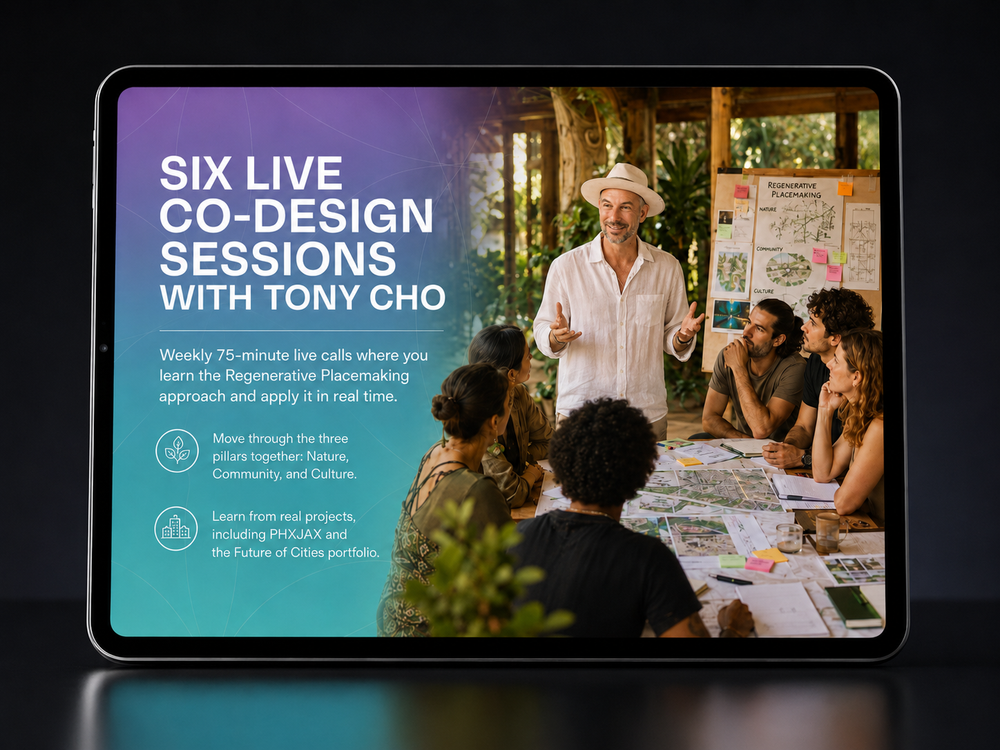
Every 75-minute session is roughly half Tony teaching and half the group working together — reviewing the toolkit, rating real projects against the framework, and shaping your own.
Tony opens by defining regenerative placemaking beyond the dictionary — where the framework came from and what makes a place regenerative rather than merely sustainable — then goes straight into the first pillar, Nature: watersheds, native systems, and the idea that people are an expression of a place, not separate from it. The second half is the toolkit: the group works through the Nature tools and weighs which hold up, which to drop, and which of yours to add.
Before the call: read chapters 1–3 of Generation Regeneration. Bring one Nature tool from your own practice.
A whole session on people: who holds power in a place, how hidden networks and dependencies work, and how to tell regenerative relationships from extractive ones. The group live-models a stakeholder map with the book’s Community toolkit, then you build one for your own place. Toolkit review closes the session, same as Session 1.
Before the call: read chapters 3–5. Bring one Community tool from your own practice.
The layer most placemaking overlooks: rituals, customs, language, and the stories a place tells about itself — plus how policy carries a good idea into something that lasts. Tony walks through the Culture toolkit, and the group closes out the three-pillar toolkit review: by the end of this session, the working toolkit reflects what the cohort brought to it.
Before the call: finish the book. Bring one Culture tool from your own practice.
Tony puts his own projects on the table as case studies — the ChoZen Center for Regenerative Living, the Climate & Innovation HUB in Miami, and the Phoenix Arts & Innovation District in Jacksonville — with their impact numbers, and the group rates each one against the framework: what makes it regenerative placemaking, and where it falls short. This is the standard your own project gets held to.
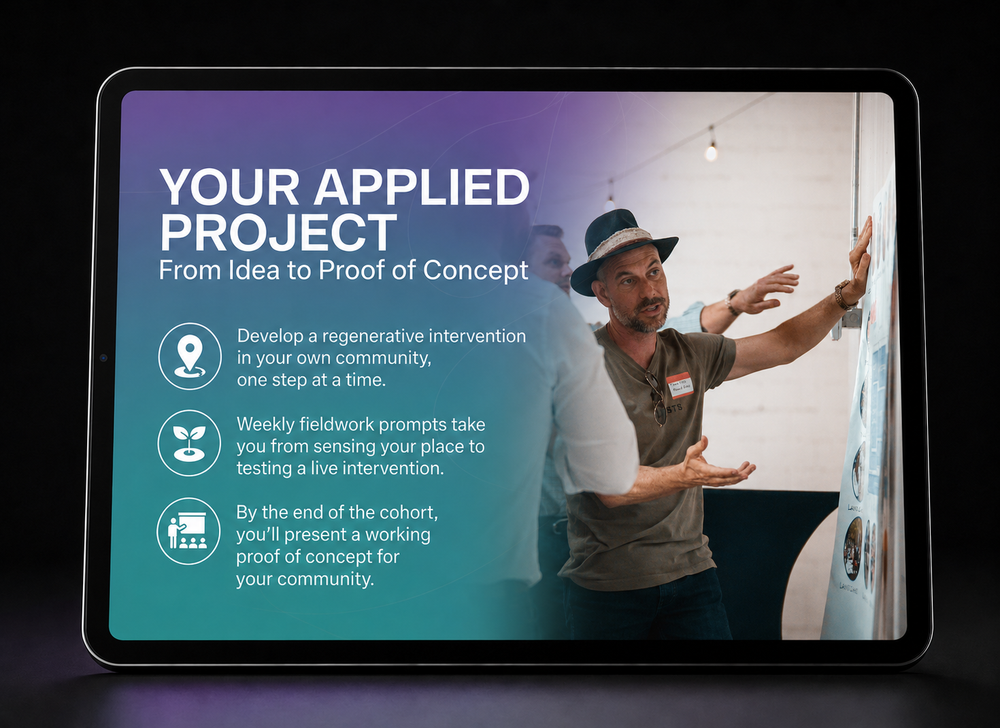
Start shaping the project you’ll submit — real, in-progress, or an idea.
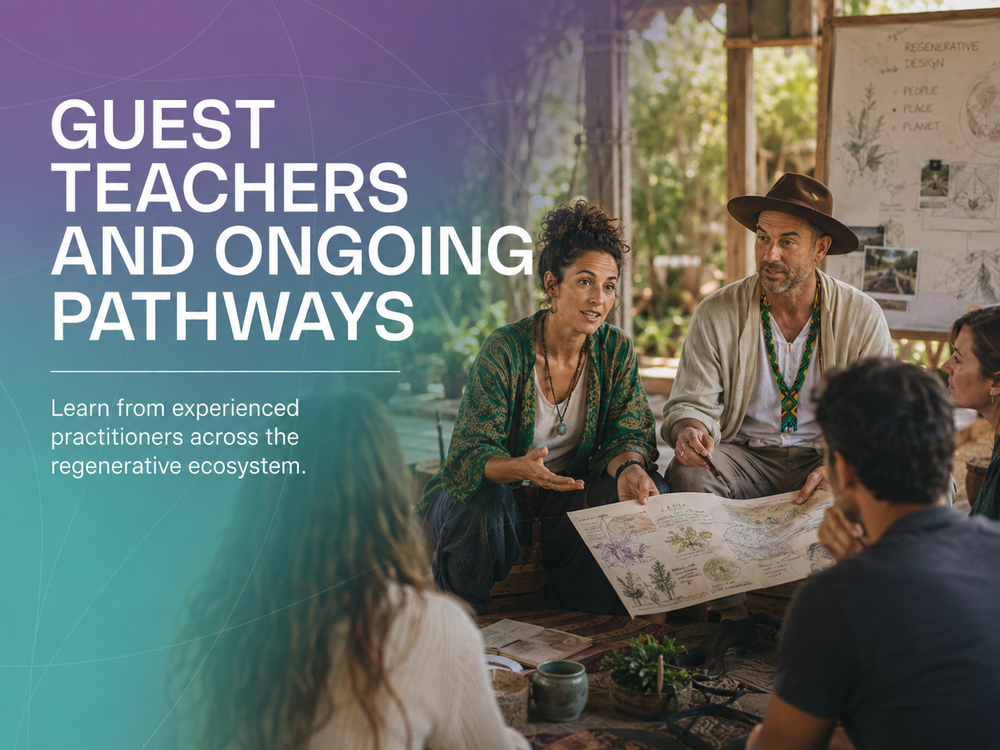
Guest practitioners join to present their own regenerative projects — bioregional hubs built on the same principles, in places other than Tony’s — and the group applies the framework to them. Guests are announced inside the course, not here.
Submit your project for the final session.
A participant project, chosen from the submissions, is presented to the group and rated together against everything the course has built. Tony closes with synthesizing reflections on what emerged across the six weeks. You leave with a proof of concept, a stakeholder map, a peer network, and a framework you helped shape.
Come ready to give feedback — and, if selected, to present.
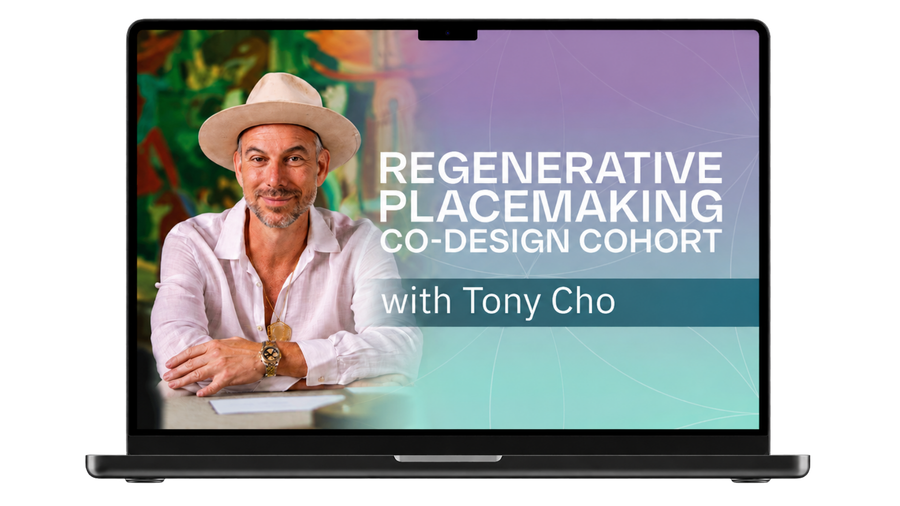
A Six-Week Transformation Practice — Live With Tony Cho.
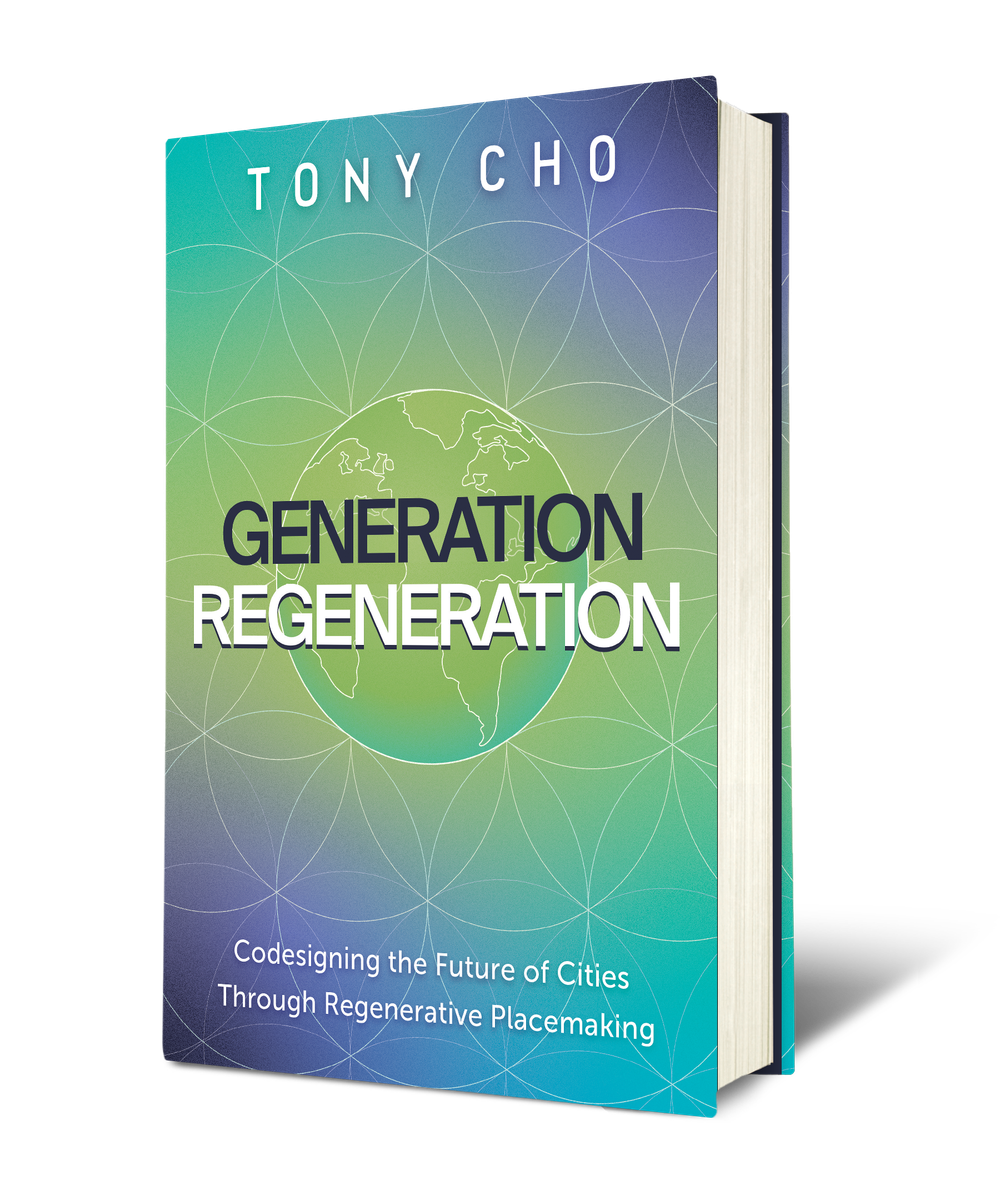
The Co-Design Course is a six-week live experience for city builders, entrepreneurs, designers, and changemakers actively regenerating the places they call home — guided by Tony Cho’s book, Generation Regeneration, and led live by Tony himself.
The book lays out the framework as it stands today. Tony is what helps you read between the lines — the nuances of what actually happens when you try to apply it in the real world. Each session, he brings his own learnings, experiences, and hard-won takeaways from decades of real projects, and introduces you to ecosystems thinking: seeing your place not as a series of isolated fixes, but as a living, interconnected system.
The distinction that matters: the book gives you the map. The Course is where you walk the terrain, and help redraw it.
You feel it before you can name it. Something about the place you live isn’t working — for you, or for the people around you.
It isn’t that your vision is too ambitious or your impact too small. It’s that you’ve been trying to heal a place — and yourself — without a guide, a framework, and a group of people actually doing the work beside you, in real time.
Tell me if this sounds familiar:
Because the future we want isn’t built in isolation. It’s read, coached, tested, and built together, by people who finally found each other.
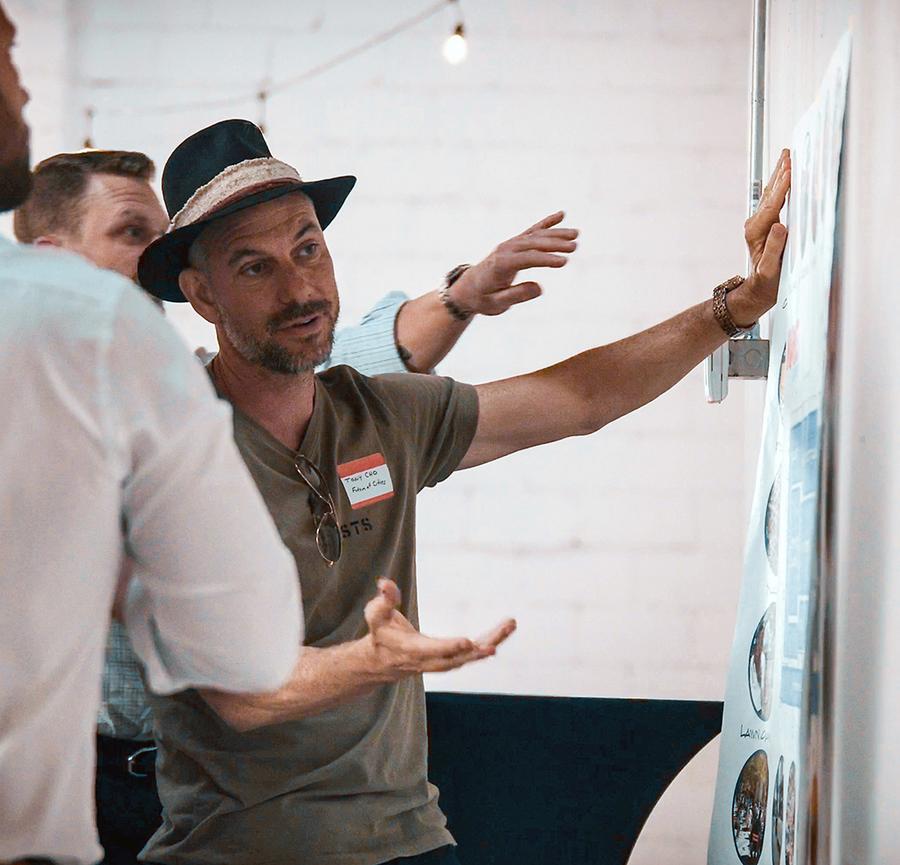
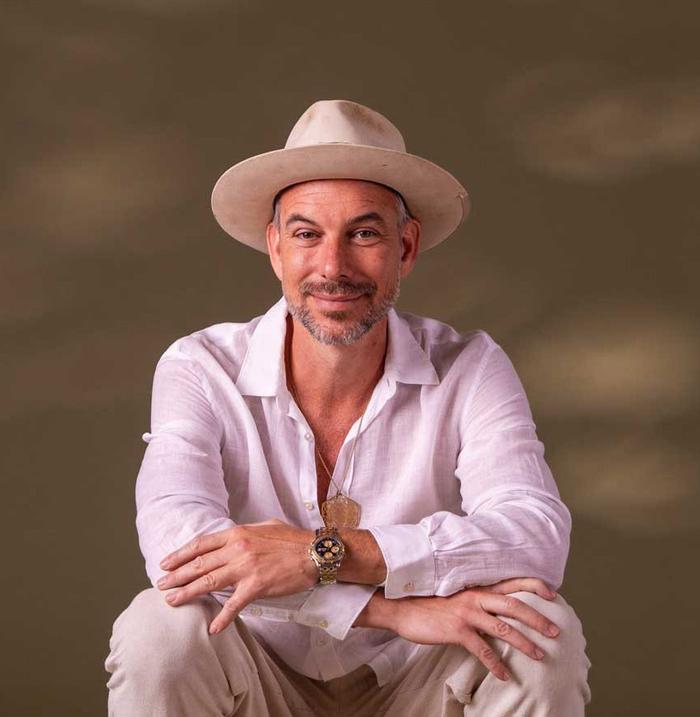
Tony Cho is an impact entrepreneur and regenerative living advocate who has spent decades pushing the boundaries of real estate, urban design, and regenerative living. He is one of the leading voices in the movement to build places that heal the people and the land around them.
His path did not start in a boardroom. Tony was raised in an ashram in Florida, and that upbringing gave him a deep connection to nature and community that has shaped everything he has built since. It is the reason his work begins with the self and the land, not with a blueprint handed down from above.
Tony’s work blends ancient wisdom with modern living, bringing Nature, Community, and Culture together into one grounded practice. He built the Co-Design Course to put that practice — and his book — directly into your hands, and to grow what he calls the Regennaissance: a movement of people building the regenerative future, one city at a time.
The projects you’ll rate in Session 4 are his own — ChoZen, the Climate & Innovation HUB, and the Phoenix Arts & Innovation District — taught by the person who built them.
Guided by Generation Regeneration but not confined to it — live teaching pairs Tony’s own experience and real case studies with a working toolkit the group revises, a small cohort, and surprise guest practitioners who join along the way.
“Tony Cho is a placemaking visionary who combines spiritual enlightenment, a mission to preserve the environment, and decades of real estate development success. He knows how to dream and really manifest it.”

“Cho offers practical solutions rooted in optimism and bold thinking, perfectly aligning with the challenges of our time. His work is essential reading for anyone who believes that our cities and communities can not only sustain us but regenerate us.”
“A complete and thorough introduction to the world of regenerative placemaking. Totally accessible to all, and a reminder that hope is far from lost for this planet.”

“Generation Regeneration offers a blueprint for a future where cities and communities thrive in harmony with the natural world.”
“Generation Regeneration is a powerful and timely contribution that distills the potential of these ideas into something accessible to everyone. It shows that living regeneratively is not only the realm of practitioners and professionals — it is a meaningful, essential pathway for all of us who care about the future of our cities and communities.”
“Before picking up Generation Regeneration, I didn’t realize how much our cities — and our lives — could be transformed by this revolutionary concept. Tony Cho breaks down complex ideas into something simple, accessible, and downright inspiring.”
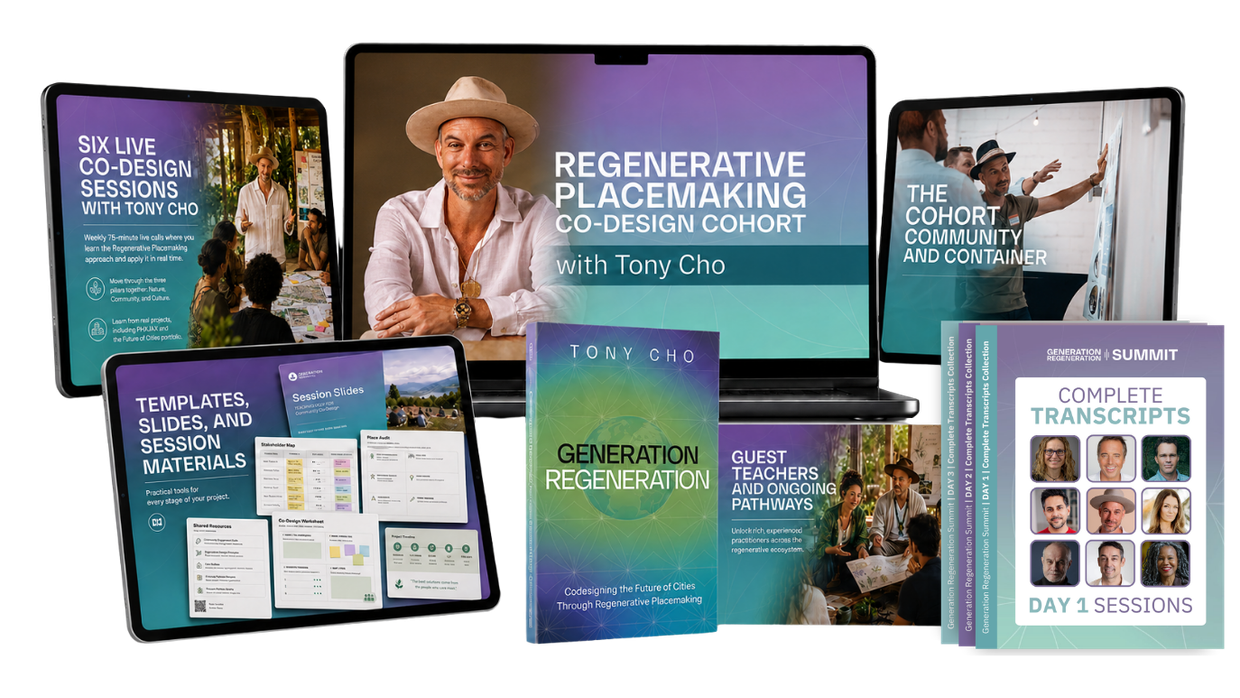
Beyond the six live sessions, your place in the course comes with everything you need to keep the work — and the book — alive long after week six.
The Co-Design Course is for people already stewarding a place and actively working on a project: city planners, architects, developers, nonprofit leaders, artists, cultural organizers, community advocates, social entrepreneurs, impact investors, landowners, and food systems workers. If you’re already in the work, ready to read Generation Regeneration as a working manual rather than a shelf book, and want to go deeper than theory, you’ll be right at home here.
Yes — across the first three weeks. Chapters 1–3 before Session 1, chapters 3–5 before Session 2, and the rest before Session 3, so the whole book is read by the time the course turns to case studies and projects. The framework is taught live too, so you won’t be lost if you fall behind; you’ll just want to catch up before the next session.
Regenerative Placemaking is an open framework, not a finished formula, and this is the first group to work it live with Tony. Roughly half of each session is teaching; the other half is the group working the toolkit — which tools hold up, which to drop, which to add from your own practice. Each pillar session asks you to bring a tool of your own, and what this founding cohort contributes shapes the framework and the programs that follow it.
You’ll have read Generation Regeneration cover to cover with its author, and you’ll leave with a tested proof of concept for a real intervention in your community, a stakeholder map of the people and forces shaping it, your project rated against the framework, and your own tools folded into the toolkit. You’ll also leave with a cohort of peers doing meaningful work in communities around the world, many of whom become long-term collaborators.
The course meets live on Wednesdays from 5:30 to 6:45 PM ET, running September 30 to November 4, 2026. Beyond the 75-minute weekly call, plan for a few hours each week: reading the book across the first three weeks, walking your neighborhood, talking to stakeholders, and shaping the project you’ll submit. Live participation is highly encouraged, as much of the learning comes through discussion, collaboration, and feedback from Tony and the cohort.
You won’t fall behind. Every call is recorded and posted within 24 hours, with full transcripts for accessibility, so you can catch up on your own schedule. We encourage you to join live whenever possible, since half of every session is the group working the toolkit and rating projects together.
It changes — that’s the point of the course. Regenerative Placemaking is an open, living framework, and the book captures it as it stands today. Tony keeps developing it through real projects, and this course is where the toolkit gets revised in the open: the tools you bring, the projects you rate, and the feedback you give become part of what it grows into.
No — the course is open to people with a real project already in motion, an early-stage or theoretical idea, and anyone who wants to be in the field and contribute, even without a project of their own yet.
No. Everyone is invited to submit a project after the case-study session, and one is chosen to be presented and rated by the group in the final session. If you’d rather learn by rating others’ work and contributing tools, you’ll get just as much out of it.
Every session is roughly half Tony teaching and half the group working together. Sessions 1–3 cover the framework and its three pillars — Nature, Community, and Culture (with policy) — each closing with a review of that pillar’s toolkit and the tools participants brought. Session 4 rates Tony’s own projects as case studies. Session 5 brings in surprise guest practitioners presenting their projects. Session 6 is a participant project, presented and rated by the whole group. If you’re still in the idea stage or just want fluency in the practice, you’ll get just as much out of it as someone with a live project.
That’s completely fine. The first three sessions — and the book — are designed to help you understand your place, identify meaningful opportunities, and choose a project you can shape by the time submissions open after Session 4.
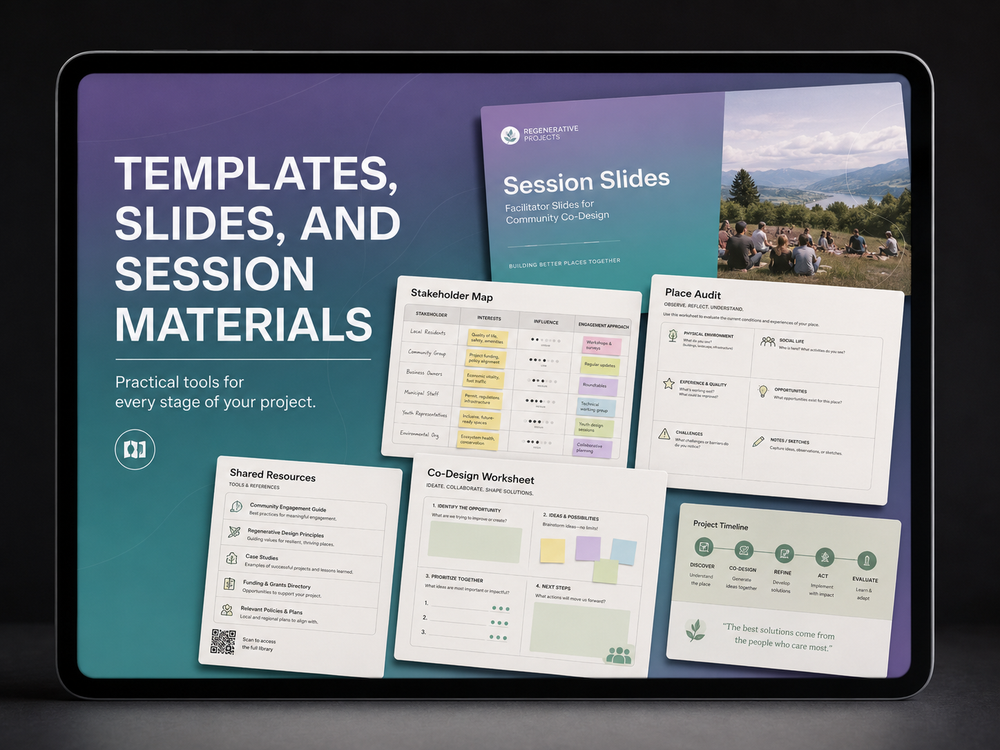
Live sessions run on Circle, with a cohort community space for connection and peer feedback between calls, plus a shared drive of templates, session materials, and the working toolkit. The Future of Cities team will make sure you’re set up before the course begins.
Yes. Sliding-scale pricing is available upon request. If cost is a barrier, reach out to our team and we’ll do our best to find an option that works.
You’ll receive a confirmation email with everything you need to access the community, get your copy of the book, prepare for Week 1, and get started with confidence.