
With rapid growth happening in the urban cores of Jacksonville and Miami, local leaders highlight the need to bridge culture, arts, community knowledge and economic opportunities — for better outcomes for all, cultural celebration & thriving cities.
By Alexandra J Tohme and François Alexandre
On Saturday, November 18, Future of Cities (FOC), in partnership with Stratosferica, held the first US edition of the city-making summit, Utopian Hours — hosted at our Climate + Innovation Hub. The “city-making festival” was dedicated to dynamic discussions and engaging debates on urban development and strategies for cities and the built environment — gathering developers, placemakers, city officials, researchers and architects and more, from the United States, Italy and around the world.
Multiple panels were presented, ranging from the “feminist city” with urban anthropologist Katrina Johnston-Zimmerman, to placemaking and citizen-making in Turin, Italy, to “maximizing public space’s potential in New York City” with Ya-Ting Liu, to National Geographic Explorer Alize Carrere’s “introduction to climatopias.”
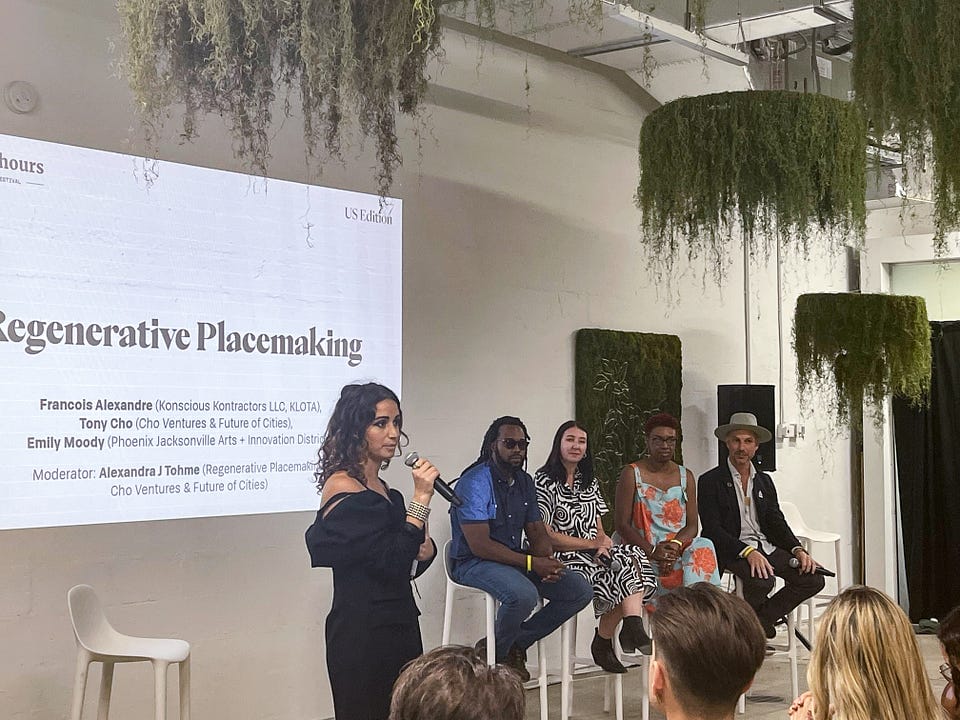
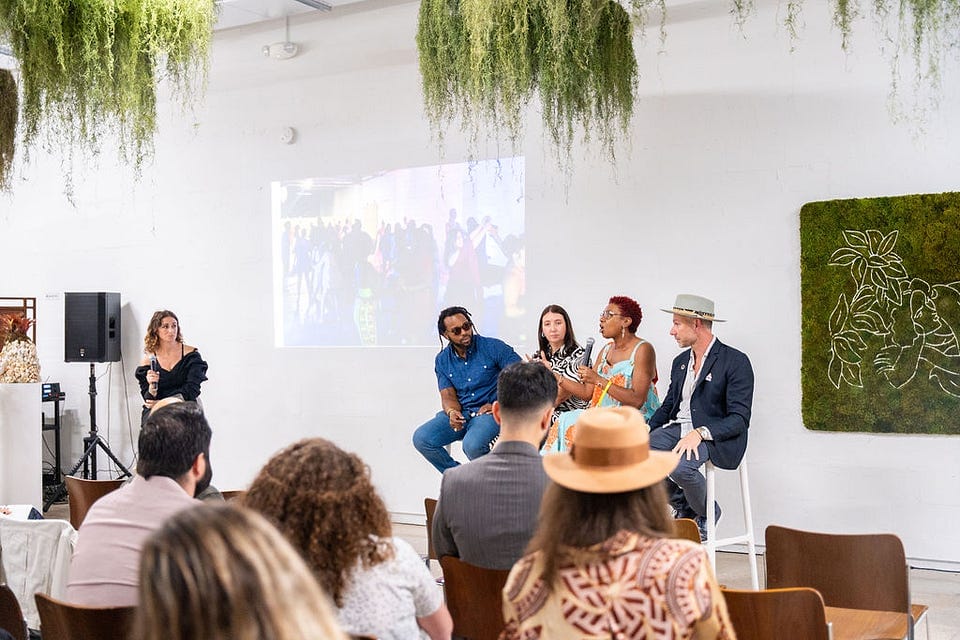
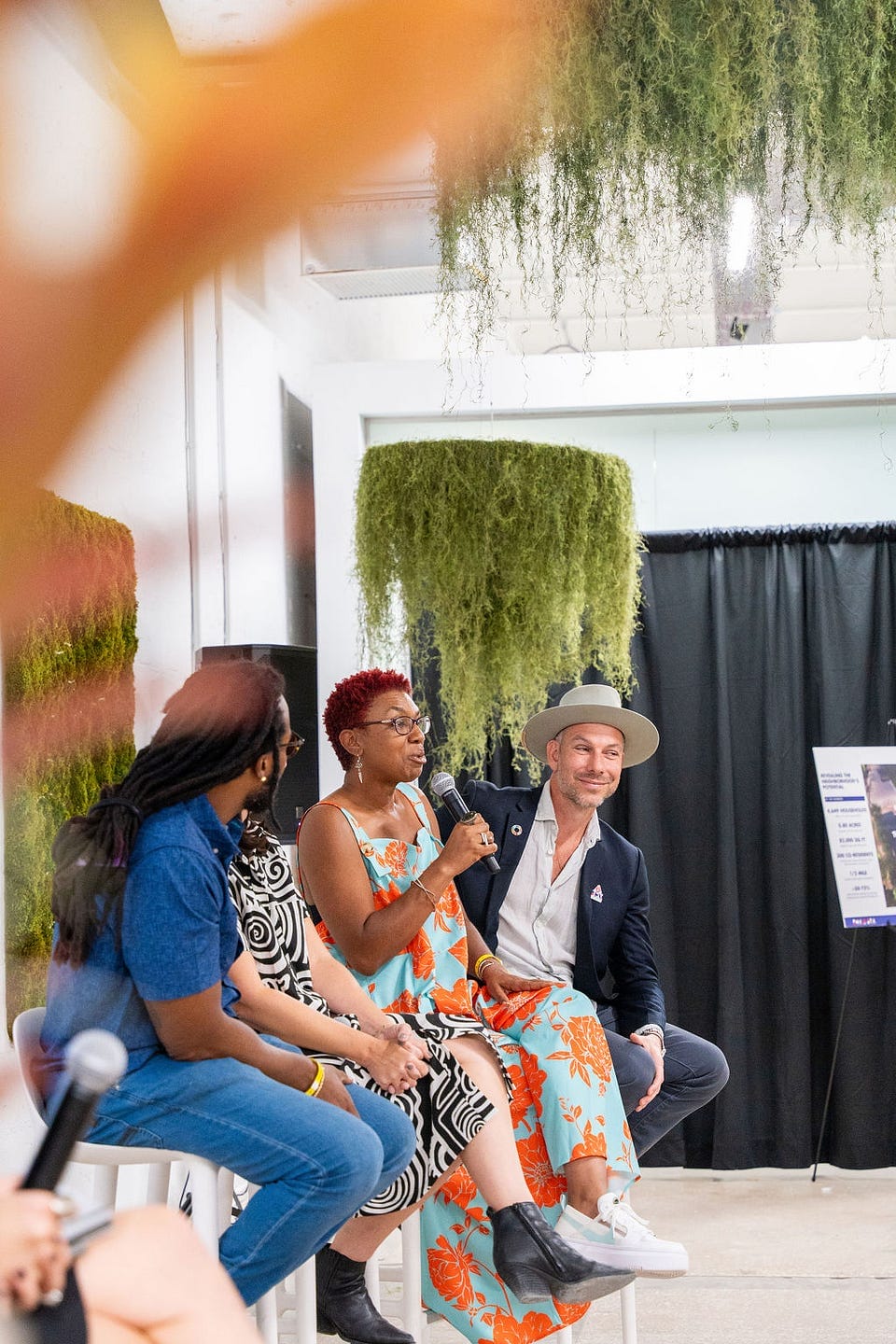
FOC held the Regenerative Placemaking Panel, moderated by Alexandra J Tohme — which zoomed in on local approaches to community-uplifting development, challenges from brain drain to displacement and economic exclusion, and presented strategies for equitable growth. The speakers bridged global perspectives from Haiti to the Arab World to South Florida.
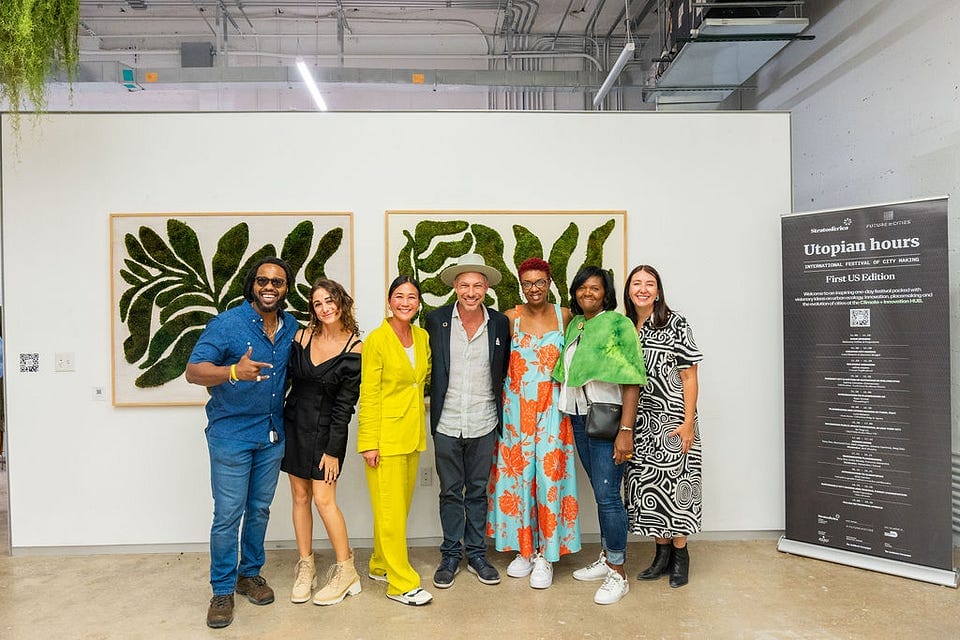
Overall, the community leaders stressed the importance of preserving the dignity of communities undergoing change: “the most important ingredient to all our efforts is: dignity,” said Alexandra — dignity for the development of the project and its lasting impact, and for all those involved and at stake. This involves uplifting community members with decent services and decent housing. Projects should not jeopardize urban living and livelihood for local residents, but rather should provide, in the words of François Alexandre, “a hand-up, not a hand-out.”
Alexandra spoke to her experiences listening to local communities facing extreme hardship when she worked in refugee camps, and the humility required in this approach — as some of the brightest ideas and most innovative strategies are found within the community members and youth themselves. This extends to the local experiences of our Florida-based panelists — with the community leadership of François Alexandre, representing Little Haiti, Miami, and Tanya Watts and Emily Moody representing Jacksonville’s neighborhoods of North Springfield and the Eastside.
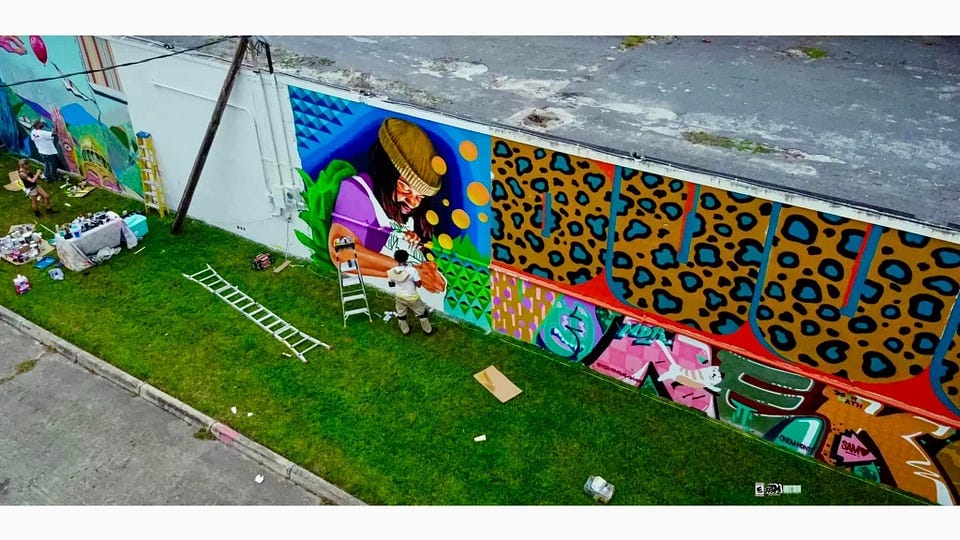
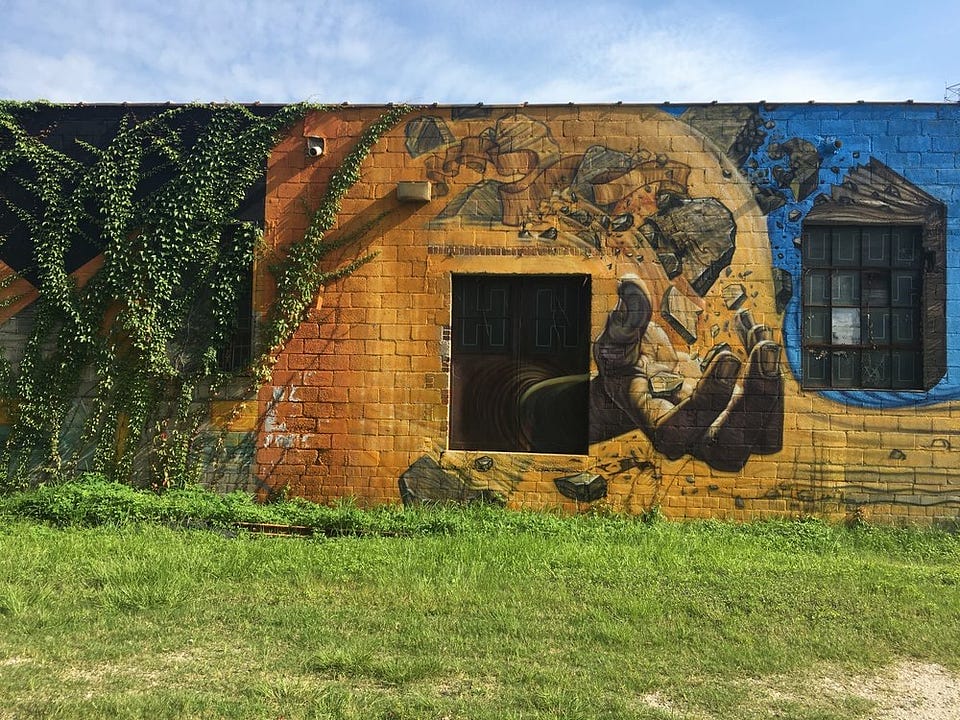
Emily Moody, third-generation Jacksonville resident and Director of Community Engagement with PHX-JAX, has been a cultural pioneer supporting the arts movement to gain traction by working with local artists — including through activations such as mural festivals and outdoor art galleries. Emily also highlighted the need for rent control of art studios to prevent the displacement of artists as property values rise, a point to which Alexandra emphasized that the attraction of new residents and visitors to Jacksonville should be coupled with supporting the existing arts scenes to flourish during this growth.
Among other initiatives by the PHX-JAX District, Tanya Watts discussed how property trainings and tax assistance help residents remain in their neighborhoods amid development.
Tanya Watts, Director of Neighborhood Affairs for PHX-JAX, echoed a sentiment raised by François Alexandre on the importance of the culture and the community of the neighborhood, “to make sure they are bridged together and not overlooked — partnering with existing community leaders doing important work, such as Suzanne Pickett of the Historic Eastside CDC, one of the oldest historic Black neighborhoods in Jacksonville, FL.” Tanya highlighted the need to be cognizant of which communities are affected by projects, and how to make sure growth is happening “not to the community, but with the community” — a point emphasized by François in describing the needed shift in perspective to uplifting communities instead of imposing changes upon them.
“Friends of Phoenix is a new non-profit we have launched,” announced Emily, and one of the pillars to support the mission is “to keep artists in the neighborhood, keep them working and hopefully provide a livable wage to support the flourishment of the neighborhood, and the wider city of Jacksonville.”
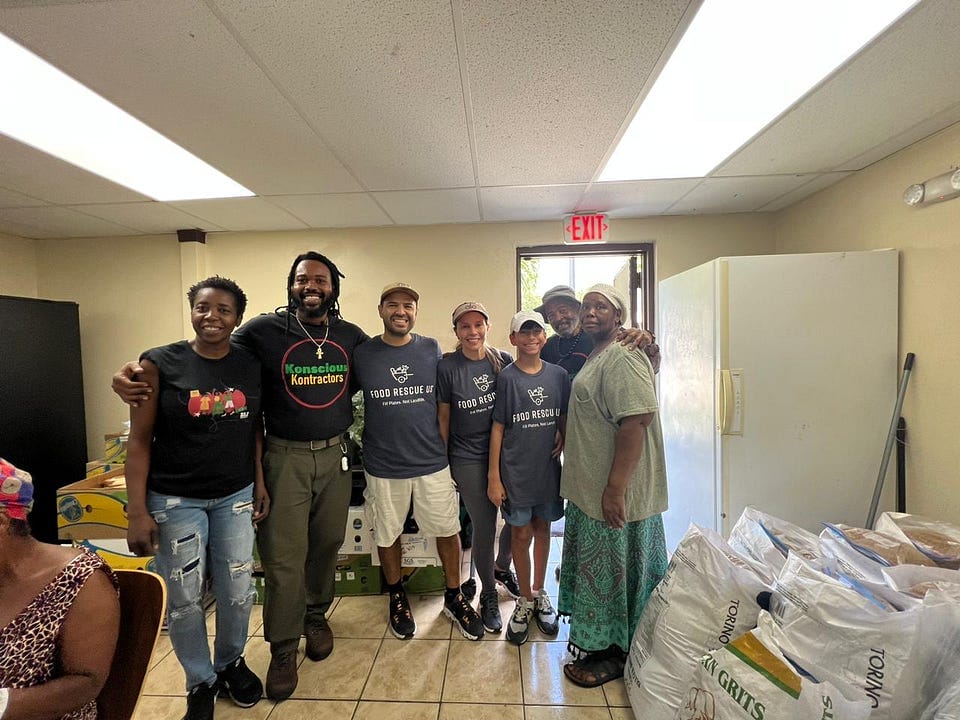
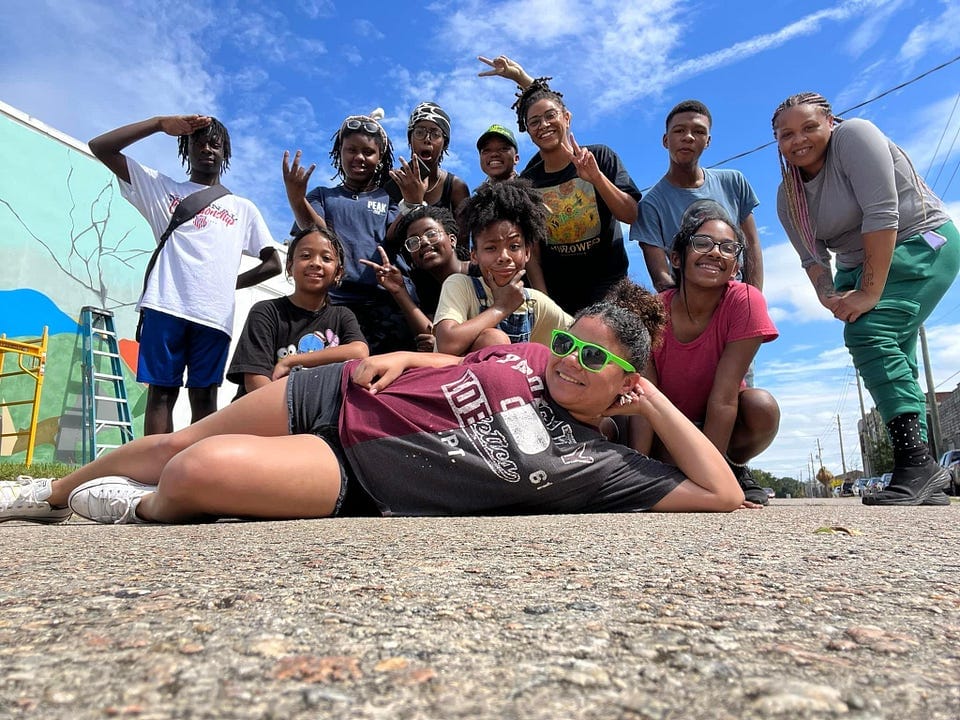
FOC’s new nonprofit endeavors in Little Haiti and Jacksonville are currently raising funds to support the programming that these community leaders have developed thoughtfully — after deep engagements, consultations, and shared activations in the neighborhoods with local residents, artists, entrepreneurs, and youth.
François Alexandre drew attention to the 50th anniversary of the boat people’s migration from Haiti, and that the community takes pride in commemorating its resilience in its historical journey. Born in Haiti and raised in South Florida, he shared insights into the transformation witnessed in Little Haiti, Miami. The time has never been more crucial than now for the co-creation of projects with and by people and groups within the neighborhood. He envisions a collective effort to create a future that caters to the well-being of everyone involved.
He is putting value into communities, indigenous and local family livelihoods, and then that value goes back into the market. If we could do that in every neighborhood, then it’s not just putting value into a coin and turning it into a dollar, but putting value into people, into local businesses, and transforming that into equitable and sustainable lasting economic growth — growth that has resiliency built in and can better withstand shocks, because it puts people, residents and communities at the core.
— François Alexandre, on the work of placemaker Scott Francisco
Events such as Utopian Hours are important, as François emphasized that gatherings such as this summit bring together “thinkers that envision and work towards what the future looks like for all of us, not just the haves or have-nots, but for all people to move forward. What does it look like collectively, to regenerate a society that we are all part of and that cares for all of us?”
Become a Regenerative Placemaker and join us in co-creating the future of cities as we work together towards a more regenerative future. Subscribe to our newsletter and follow us on Instagram.